The Methodology

Evangelize. Catechize. Form.

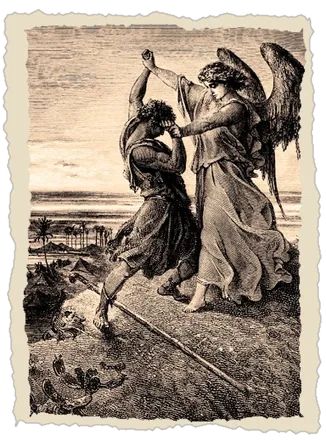
Engraving of Jacob wrestling the angel, in a gold arch frame
01 · Evangelization

Evangelization comes before catechesis

Why does evangelization come first? Consider this:

I tell you that my dad, Emil, wants you to wear clean, ironed shirts. It really bothers him if you don't. Do you know my dad? Do you have a relationship with him, a good one? Do you have anything to do with him? No. To you, my dad is irrelevant, and what he says seems random. You will never see him or meet him, so it doesn't matter.

But say you see him every day. He is your boss, and he pays you a great salary. Is what he wants still irrelevant? No. The relationship changes how much his opinions and desires matter to you.

Same with God. The Catechism, the rules and order of God, becomes relevant and worth something to us only after we realize our relationship with God. Catechizing only works if students understand who God is to them and what He is doing for them. Then, catechism works! They accept the teachings of God because they realize God is truth, He is good, and He is ultimately so beautiful.

A substantial amount of time should be spent in this phase. Many people underestimate how much time they should invest in evangelizing. The reality is that understanding and believing in God's love for us is a hard lesson to learn. There are often layers of spiritual woundedness in our lives that prevent us from seeing and accepting the love of God. Evangelization is not one-size-fits-all, as everyone's wounds are different, so evangelization must be very thorough.

In my program, evangelization is not merely sprinkled in alongside catechetical lessons, as it is in doctrine-first models of teacher training. It is more than a third of the entire program, and it continues throughout the catechesis and formation phases.

Evangelization is done through Scripture

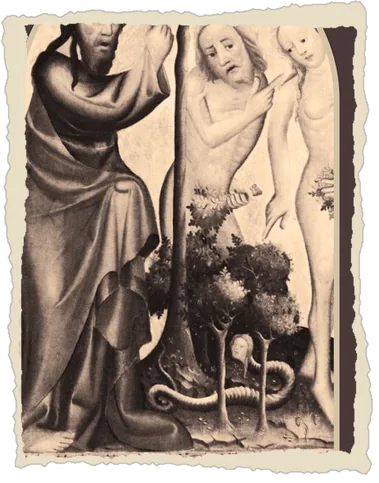
Evangelization is done primarily through Scripture. The story of our redemption, as found in the Scriptures, should be the starting point of all Christian education. As St. John Paul II wrote:

“The ‘heart’ of our redemption is the starting-point of every process of Christian education.”St. John Paul II · Letter to Families, 16

To know who God is, who He is to us, and who we are to Him, we must know the Scriptures. We must know the story of our creation, fall and redemption. No human testimony, no miracle story, nothing can explain who God is to us and who we are to Him better than the entire story of salvation as found in the Bible. This relationship is what changes how relevant the opinions and desires of God, His laws and decrees, are to us.

Which leads us to ask: how do you evangelize with Scripture?
Important tips for teaching Scripture

1. Teach with the Bible in hand

  • No summaries. Why would you imagine you can tell the most beautiful love story better than God Himself as He tells it through the Bible? Wave goodbye to summarized stories and crack open the actual Bible. The Word of God is living and effective. It comes with a divine power of its own that can be found in no other textbook or retelling. When we summarize Bible stories, we strip the text of its transformative grace.

    When I used to teach 5th grade, I saw to it that every child had a Bible. I would introduce the lessons, and we would dive straight into the Bible and read it! When we read the stories, they would express how much more exciting it was to read it for themselves. They had never read stories like David and Goliath, Noah or Jonah from the actual Bible. The bell would ring for recess, and cries would go up in the classroom as students begged to stay a few more minutes to see what happens at the end of the story. Nothing can come close to the narrative as it is told in the Bible.

  • Provide individual Bibles. Every student must have their own Bible to follow along. They need to see the words on the page for themselves, physically navigating the text to build a lifelong habit of Scripture reading.
  • Proclaim the Word aloud. You read out loud, and they follow along. Pause frequently to check for understanding and let the weight of the words sink in. Children must hear the words of Scripture proclaimed to them. Hearing the Word spoken aloud aids in comprehension, and when the Word is shared together, it is infinitely more powerful, because where two or three are gathered in His name, He is there.

2. Build categorical timelines

  • Organize the events into categories. Many Christians know various standalone stories from the Bible, but they cannot tell you the context because they don't have a categorical timeline in mind. Instead of forcing yourself and your students to memorize a rigid list of historical dates, build a categorical timeline. Select central events, covenants or key geographical locations to anchor the timeline. Group the biblical narrative into these specific buckets, using these "manageable eras" as a mental framework whenever you read Scripture together.
  • Zoom in and out. Constantly zoom in and out of this timeline as you begin each new lesson, so students always know exactly where they are in the story of salvation history (for example, mapping cultural shifts, geographical locations and evolving societal contexts).
  • The yearly overview. At the beginning of the year, dedicate 10–20 minutes to a sweeping overview of the entire timeline, using selected Scripture passages that support your overarching theme.

3. Weave an overarching theme

  • Pick a central focus. You must pick one overarching theme to weave through all the categories selected for your timeline. This theme must be simple, memorable and intentionally restated in every single lesson to tie the curriculum together.
  • Address faith wounds. You can use your standard curriculum book to help you decide on your theme, or, even better, choose a theme that directly addresses a specific faith wound or spiritual struggle you see in your classroom.
  • Examples of themes: the School of Trust, the Kingship of Jesus, the Priesthood, the allure of paganism, or a specific commandment or sin (such as idol worship).

4. Teach the whole story of Scripture

People often choose a selection of New Testament stories to evangelize, but my mission is to evangelize through the entire story of salvation, so that people do not have a fragmented sense of who God is. Many know individual stories of the Bible but do not see the bigger picture of how it all works together as one grand story. It is one great story, not a compilation of random stories, so we must teach it as one whole story from beginning to end.

Painting of a teacher holding a book, in a gold arch frame
02 · Catechesis Series coming soon

Defining and defending Church teaching

Using the Old Testament, the New Testament and historical documents to define and defend Church teaching, this phase of Catholic Essentials seeks to bring about not just an intellectual understanding of what the Church teaches, but a genuine conviction that these teachings are the true teachings of God.

The three-step strategy

To effectively define and defend the teachings of the Church, build every lesson on a strategy that taps into three essential pillars of truth:

1. The Old Testament
2. The New Testament
3. The Historical Documents of the Early Church Fathers

Why this three-step method?

  • The unity of Scripture. You cannot fully understand one Testament without the other. The Old Testament reveals the foundational meaning hidden within the New Testament, and the New Testament sheds light on the ultimate meaning of the Old. Teaching them together to prove the ultimate meaning of a particular passage, and demonstrating how to use it as a guide, shows students the brilliant, cohesive genius of God's unfolding plan.
  • Historical documents. In a modern world where anyone can take a Bible verse out of context to fit their own narrative, historical documents are our anchor. The writings of the early Church Fathers (especially those who were students of the Apostles!) help us understand the original authors' intended message. By looking at how the very first Christians were taught to understand the Scriptures, we can definitively prove that Catholic teachings are the correct, unbroken interpretation of God's Word.
Painting of a figure with arms raised in prayer, in a gold arch frame
03 · Formation Series coming soon

A path to deeper intimacy with Jesus Christ

If formation is passed by, everything you have taught up to this point can be lost and wasted. Evangelization and catechesis plant the seed, but formation ensures the roots grow deep enough to survive. When the feelings of those initial encounters with God pass, students need to understand what is going on and how to navigate it.

How to form students

1. Cultivate a deeply sacramental life

  • Anchor in the sacraments. A virtuous life is impossible to maintain on human willpower alone; it requires grace. Formation must move beyond the classroom and into the chapel. Teach students the immense value of frequent participation in Confession and the Eucharist.
  • Encourage encounter. Just as students learn to flock to the Blessed Sacrament at lunchtime, you must model and guide them in spending quiet, personal time with Jesus. This continuous encounter is what sustains their faith long-term.

2. Develop virtue and core identity

  • Holiness is practicing the good. True formation teaches students that holiness is not merely about staying out of trouble or avoiding sin. It is an active, daily pursuit of the good. We must shift their mindset from simply "avoiding the bad" to intentionally and joyfully practicing virtue.
  • Becoming our true selves. Every student has a unique, core identity given to them by God. Guide them to see that living a virtuous life is not a set of restrictions; it is the exact path that allows the beauty of their true identity to develop to its absolute highest potential. When we actively practice the good, we finally become exactly who we were created to be.

3. Draw on worthy models

Prayer from St. Teresa of Ávila. The devout life from St. Francis de Sales. The little way of St. Thérèse. Lessons on desolation, discouragement and more, all as taught by faithful men and women of God who became truly holy by following their own little paths to Him. Knowing that they walked these paths, became great saints and entered deep intimacy with God reassures us that there is something to what they teach, something we can benefit from.

To ignore their advice is to start from ground zero. Far better to draw on the wisdom of our older brothers and sisters, the saints, than on our own experience alone. These lessons are not built on my own personal experience; I have nothing of my own that is time-tested. The saints' approaches to prayer, the Sacraments and the spiritual life have been tested across many eras of history, and they have borne the fruit of intimacy with God.